Choosing a spring is not just a matter of matching its size to a drawing. The way it carries a load affects how it mounts, moves, and wears over time. A torsion spring produces torque as its legs rotate around a central coil. An extension spring stretches along its axis and pulls back toward its original length. The difference can look small on a workbench. It matters once the spring is installed.
What is the difference between a torsion and extension spring? This guide compares their working motion, force direction, mounting needs, space requirements, and common design trade-offs. It also offers five practical tips for evaluating options, from checking load data to considering repeated cycles. For example, a torsion spring may fit a hinged panel, while an extension spring may suit a sliding mechanism that needs a pulling force. These are useful starting points, not universal rules. Actual performance depends on dimensions, material, operating conditions, and manufacturer specifications. That part is easy to overlook. A spring that seems suitable by appearance alone may behave differently under the real load. Compare the application carefully, and verify the relevant ratings before choosing. A little uncertainty is normal; good selection means testing assumptions, not pretending every case is obvious.
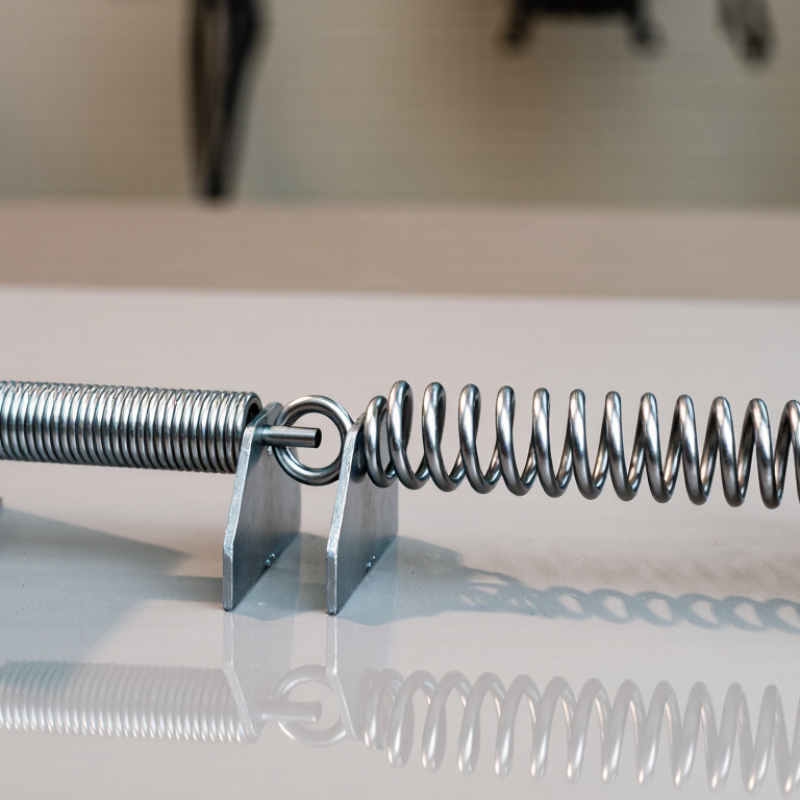
Torsion and extension springs store energy through different movements. A torsion spring resists rotation as its legs turn. An extension spring stretches along its axis as its hooks move apart. In both, elastic deformation stores energy for release when the load drops. The Spring Manufacturers Institute’s Handbook of Spring Design describes spring rate as the change in load per unit deflection. For a linear spring, stored energy is approximately half the spring rate multiplied by deflection squared: ½kθ² for rotational movement, or ½kx² for linear movement. Real springs can depart from this neat model.
An extension spring may have initial tension, so some force is needed before its coils begin to separate. A torsion spring’s response depends on its rotation direction and how its legs are supported. Small setup differences matter. The ASM Handbook, Volume 1, reports steel’s elastic modulus at about 200 GPa; this material property helps explain spring stiffness, but does not alone predict a finished spring’s rate. Wire diameter, coil dimensions, and heat treatment also affect performance. A practical check is to measure load or torque at several deflections, rather than assume the spring behaves perfectly linearly. That assumption can be tempting—and wrong.
| Comparison Tip | Torsion Spring | Extension Spring | What to Check |
|---|---|---|---|
| 1. Identify how energy is applied and released | Stores energy when its legs rotate and the spring coils wind or unwind. It releases energy as rotational torque. | Stores energy when it is stretched along its axis. It releases energy as the spring pulls back toward its free length. | Choose torsion for a rotating load and extension for a load that moves in a straight line away from the spring’s anchor. |
| 2. Compare the type of load | Specified by torque, commonly measured in newton-metres (N·m) or inch-pounds (in·lb), at a stated angular position. | Specified by force, commonly measured in newtons (N) or pounds-force (lbf), at a stated extension. | Compare load at the actual operating position—not just a maximum rating. Record the required angle or extension and the corresponding torque or force. |
| 3. Account for spring rate and preload | Torque generally increases with angular deflection over the working range. A designed initial torque may also be present. | Force generally increases with extension. Many extension springs have initial tension, so extra force is needed before the coils begin to separate. | Request the spring rate and any initial torque or initial tension. For an extension spring, the working force is commonly approximated as initial tension plus spring rate multiplied by extension. |
| 4. Check the mounting and end geometry | Usually has legs or arms that transmit torque to a shaft, hinge, or other rotating part. Leg shape and orientation affect fit and loading. | Usually has hooks, loops, or other end fittings for attachment between two points. End geometry affects how the load is transferred. | Confirm attachment points, available space, alignment, direction of motion, and clearance. Avoid side loading or mounting arrangements that bend the spring unexpectedly. |
| 5. Evaluate travel, fatigue, and safe operation | Must stay within its specified angular travel and operating stress. Repeated cycling can cause fatigue, particularly if the spring is over-rotated. | Must stay within its specified extension and load limits. Excessive extension can overstress the wire or damage the end fittings. | Check cycle-life requirements, operating environment, material and finish, and the manufacturer’s working limits. Secure stored-energy springs during installation and servicing. |
It resists rotation as its legs turn, storing energy through elastic deformation. Small changes matter.
It stretches along its axis as its hooks move apart. Its coils may need initial force before they begin separating.
An extension spring pulls along its length. A torsion spring produces torque as its legs rotate.
For a linear spring, energy is approximately half the spring rate multiplied by deflection squared. Real springs may not follow this model exactly.
Wire diameter, coil dimensions, and heat treatment all affect performance. Material properties alone cannot predict a finished spring’s rate.
Compare the rate across the mechanism’s working range, not at only one point. A hinge may need steady torque through a wide angle.
Extension spring initial tension and torsion spring leg position can change the applied force or torque. A small setup difference can matter.
Check its working range, deflection limits, dimensions, and end fittings. Maximum load alone is not enough; repeated cycling can affect service life.
Measure force or torque at several deflections using the intended installation setup. I would not trust a paper estimate alone.
What is the difference between a torsion and extension spring? The key distinction is how each spring stores and releases energy: a torsion spring works by twisting around an axis, while an extension spring stretches under tension and contracts when the load is removed. Their force, deflection, and load behavior depend on their design and the demands of the application, so comparing operating range and expected loads can help identify a suitable option.
Mounting and available space also matter. Torsion springs need room to rotate and often rely on a shaft or support points, whereas extension springs need space to lengthen and secure attachment points. Consider durability, maintenance needs, and common failure risks, such as fatigue or wear at contact points. The best choice balances the required motion and force with installation constraints, operating conditions, and the desired service life.

 Vistaro Door