Choosing the right R-value for your insulated garage door is crucial. Many homeowners wonder, "What is the best R-value for an insulated garage door?" According to Jane Smith, an expert in home insulation, "The optimal R-value balances energy efficiency and cost." This insight reflects a common dilemma: higher R-values often mean higher costs.
Understanding your climate is essential. In colder regions, higher R-values help maintain indoor temperatures. For warmer areas, lower values may suffice. However, overspending on insulation isn't wise. You want efficiency but also value for your money.
Furthermore, not all garage doors offer the same insulation quality. Look for doors with multi-layer construction. These doors typically provide better thermal performance. It's important to weigh your options carefully. The right choice could lead to energy savings. Ultimately, the best R-value is one that meets your specific needs while aligning with your budget.
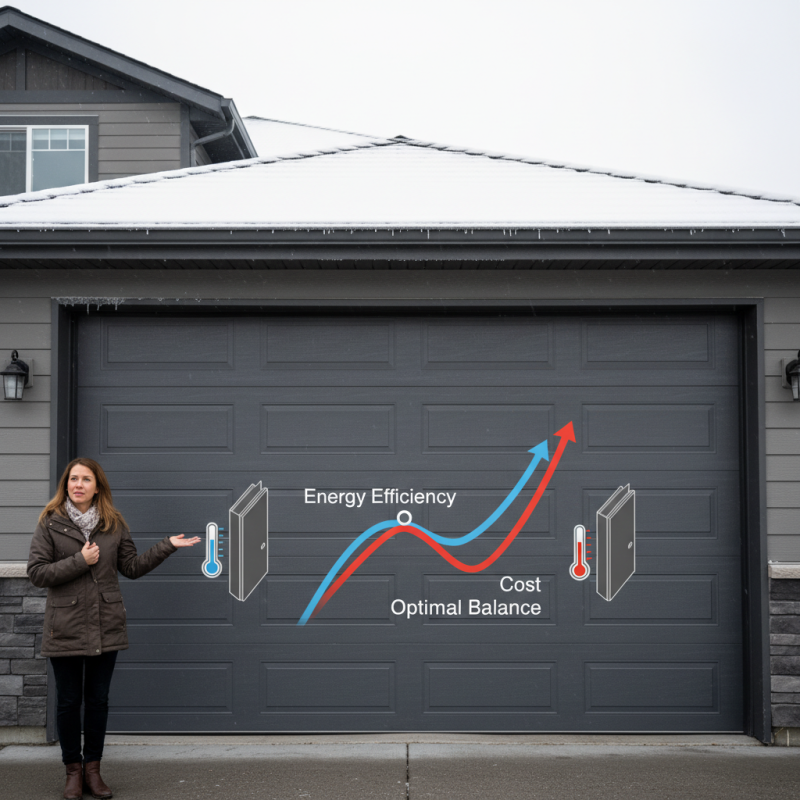
When considering insulation for your garage door, understanding R-value is crucial.
R-value measures thermal resistance. The higher the R-value, the better the insulation.
According to the U.S. Department of Energy, garages can account for significant energy loss in homes. A well-insulated garage can reduce
heating and cooling costs by as much as 20%. This significant savings underscores the
importance of selecting the right R-value.
The ideal R-value depends on your climate zone. For colder regions, an R-value of 16 or higher
is often recommended. In moderate climates, an R-value of 10 to 16 may suffice. A study
from the National Association of Home Builders found that homes in northern climates benefit greatly from higher R-values.
This is vital for homeowners looking to improve energy efficiency.
While these numbers guide insulation choices, real-world factors come into play. Installation quality and materials impact overall performance.
Even a high R-value will not deliver results if installation is poor. Homeowners should assess their specific garage conditions.
Understanding local climate is essential to make informed choices. Finding the right balance requires careful consideration and possibly
professional advice.
When selecting the R-value for your insulated garage door, consider your climate. In colder areas, a higher R-value is crucial. It helps keep the heat inside. A lower R-value might suffice in warmer climates but may not offer the same durability in winter.
Think about how often you use the garage. If you frequently enter and exit, a better-insulated door can improve comfort. Consider the door's surrounding environment too. External walls, windows, and roof materials can all impact insulation needs.
It's essential to be realistic about your budget and the desired energy savings. Sometimes, spending more initially could lead to lower energy costs over time. However, the immediate cost can be daunting. Each choice you make should reflect your long-term goals rather than just short-term savings. Finding the right balance is key.
When selecting insulation for garage doors, it's vital to understand various materials available. Polystyrene and polyurethane are common choices. Polystyrene offers decent insulation at a lower cost, making it a popular option. However, it may not perform as well in extreme temperatures. On the other hand, polyurethane provides superior insulation, but it can be more expensive and difficult to install.
Fiberglass is another material worth considering. It’s lightweight and provides good thermal performance. Yet, it can be prone to moisture issues, leading to potential mold growth. You might find it beneficial to assess your climate conditions and garage usage patterns before making a decision.
In a world where energy efficiency matters, understanding these materials can save on heating and cooling costs. Sometimes, a material that seems perfect may not hold up well over time. Regular inspections and maintenance can ensure that your insulation continues to perform effectively. Be cautious, as the best insulation for one garage might not work well for another. Individual needs vary, and careful consideration will lead to better outcomes.
| Insulation Material | R-value | Thermal Resistance | Cost per Square Foot | Noise Reduction |
|---|---|---|---|---|
| Polyurethane Foam | R-12 to R-20 | Excellent | $1.50 | High |
| Polystyrene | R-5 to R-11 | Good | $1.00 | Medium |
| Fiberglass | R-2.9 to R-4.3 | Fair | $0.70 | Low |
| Reflective Radiant Barrier | R-1 to R-3 | Fair | $0.50 | Low |
| Spray Foam | R-6 to R-7 | Excellent | $2.00 | High |
Selecting the correct R-value for your insulated garage door is essential. R-value measures thermal resistance, influencing energy efficiency. Assessing your climate and location helps determine the ideal R-value. For instance, colder regions typically require higher R-values, while milder climates can function with lower values. The U.S. Department of Energy suggests an R-value range of 12 to 18 for most residential areas.
In particularly cold climates, an R-value of 20 or more may be advantageous. This provides superior insulation, reducing energy costs significantly. Users in regions with extreme temperatures might find that an R-value over 25 minimizes heat transfer effectively. Nevertheless, evaluating factors such as local energy costs and potential savings is crucial.
Tips: Consider conducting an energy audit before your final decision. This process identifies specific needs and weaknesses in your home’s insulation. Also, be mindful of your garage's usage; heated versus unheated spaces dictate different insulation needs. Reflect on the activities in your garage; if you use it for living space, a higher R-value becomes necessary. Don't overlook the importance of a properly sealed door, as gaps can undermine insulation effectiveness.
Choosing an appropriate R-value for your insulated garage door involves weighing the cost against the benefits. Higher R-values offer improved thermal performance. This means better insulation, reduced energy bills, and enhanced comfort. However, the initial investment can be substantial. Homeowners must assess how often they use the garage and how climate impacts their needs.
Investing in higher R-values may provide long-term savings. For example, areas with extreme temperatures often benefit significantly. In contrast, those in milder climates might find the cost unjustified. It's essential to analyze your specific situation. Gather data on energy costs and usage habits to make an informed decision.
It's also worth considering installation costs and potential maintenance. A higher R-value door can be heavier and more challenging to install. This could lead to increased labor costs. Reflect on these factors to ensure a wise choice. Balancing insulation needs with budget constraints can be a complex yet rewarding process.
: R-value measures thermal resistance in insulation. Higher values indicate better insulation.
A well-insulated garage can reduce heating and cooling costs by up to 20%.
For colder regions, an R-value of 16 or higher is recommended for efficiency.
Even high R-values may fail if installation is poor. Quality installation ensures effectiveness.
Common options include polystyrene, polyurethane, and fiberglass. Each has unique pros and cons.
Yes, fiberglass can be prone to moisture issues, possibly causing mold growth over time.
Colder climates need higher R-values. Milder climates can function with lower values.
Yes, an energy audit helps identify weaknesses in insulation. This promotes informed decisions.
Heated versus unheated spaces require different R-values. Your activities should dictate your choice.
Gaps can significantly undermine insulation effectiveness. Proper sealing is essential for good performance.
When selecting an insulated garage door, understanding R-value is crucial for effective insulation performance. The R-value measures the thermal resistance of insulation materials, making it essential to choose the right one based on your climate and location. Factors such as the type of insulation material, local weather conditions, and overall energy efficiency goals play a significant role in determining the optimal R-value.
To determine what is the best R-value for an insulated garage door, homeowners should also evaluate the cost versus benefits of higher R-values. While higher R-values typically offer increased thermal resistance and potential energy savings, the initial investment must be weighed against long-term savings. By considering these aspects, you can make an informed decision that balances comfort, efficiency, and cost-effectiveness for your garage insulation needs.

Vistaro Door