Industrial door tracks carry heavy loads, guide moving panels, and endure dust, moisture, vibration, and repeated impact. Knowing how to clean and lubricate industrial door tracks helps reduce friction and supports safer, more predictable operation. It also makes early problems easier to notice.
Ricky Smith, a respected reliability and maintenance educator, emphasizes, “Clean equipment is easier to inspect, maintain, and trust.” That principle applies directly to door tracks. Begin by following the site’s isolation procedure and the door manufacturer’s instructions. Remove loose dirt with a stiff nylon brush or industrial vacuum. Use a suitable cleaner on oily residue, then wipe the track completely dry. Do not leave damp sludge behind.
Look closely at the corners.
Check rollers, fasteners, guide surfaces, and mounting points for wear or looseness. A clean track may still hide bent sections or damaged rollers. This is where a rushed job can fail. Apply a thin, manufacturer-approved lubricant to the correct contact areas. Avoid flooding the track, because excess lubricant attracts abrasive dust and may create a sticky paste. Open and close the door slowly, then listen for scraping, clicking, or uneven movement.
The first attempt may not fix everything. That is normal. Industrial environments vary, and lubricant selection sometimes requires review. Record what was cleaned, which product was used, and what changed during testing. Consistent inspection, careful cleaning, and measured lubrication create a more reliable maintenance routine. Safety remains the priority. If movement stays abnormal, stop using the door and request qualified technical support.
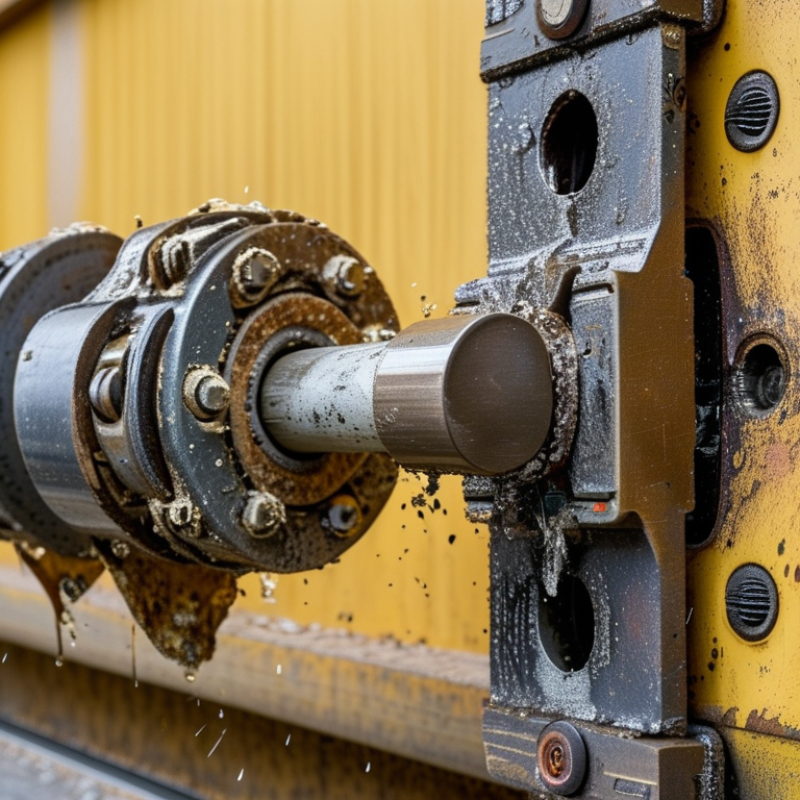
Before cleaning or lubricating an industrial door track, lock out power under OSHA 1910.147. Unexpected movement can crush fingers, shift panels, or release stored spring and pneumatic energy. OSHA estimates that proper lockout/tagout prevents about 120 fatalities and 50,000 injuries each year. The figures are serious, yet many maintenance routines still treat isolation as a quick switch-off.
An authorized employee should identify every energy source, including electrical disconnects, air lines, counterbalance springs, and elevated door sections. Notify affected workers, shut down the equipment, and apply a personal lock and tag. Release or block stored energy. Then test the controls and verify zero movement. Try-start checks matter. A silent motor is not proof of isolation.
With the door secured, remove grit, metal flakes, and hardened grease using a brush or vacuum. Do not place hands inside rollers or pinch points. Apply a lubricant suitable for the track and hardware, using a narrow, controlled stream. Excess lubricant attracts dust and can make the track slippery. Inspect worn rollers, bent guides, loose fasteners, and damaged guards. OSHA’s Control of Hazardous Energy guidance emphasizes documented procedures, training, and periodic inspections, not memory alone. A practical weakness remains: teams often forget to review stored energy after repairs. That step deserves a written check.
| Work Dimension | Required Action or Data | Safe-Practice Criteria | Verification or Frequency | Reference |
|---|---|---|---|---|
| Scope of Work | Remove dirt, dust, metal particles, and hardened residue from industrial door tracks, then lubricate designated moving points. | Treat the work as servicing or maintenance when an employee could be exposed to unexpected startup, energization, or release of stored energy. | Complete a task-specific hazard assessment before work begins. | OSHA 29 CFR 1910.147 |
| Employee Roles | An authorized employee performs the lockout and servicing; affected employees are informed that the door is unavailable. | Only trained and authorized personnel may apply or remove energy-control devices. All affected personnel must follow the facility procedure. | Confirm training and authorization before isolation. | OSHA 29 CFR 1910.147(c)(7) |
| 1. Notify Personnel | Notify operators, nearby workers, security personnel, and other affected employees that the door will be removed from service. | Explain the reason for the shutdown and the expected duration. Keep the opening controlled while the door is unavailable. | Notification must occur before shutdown. | OSHA 29 CFR 1910.147(d)(1) |
| 2. Shut Down Equipment | Stop the industrial door using the normal operating control. | Stopping the door at its control station is not energy isolation; continue with disconnecting and locking the energy source. | Confirm that all powered movement has stopped. | OSHA 29 CFR 1910.147(d)(2) |
| 3. Isolate Energy | Identify and isolate electrical, pneumatic, hydraulic, mechanical, gravity, and other applicable energy sources. | Use the disconnecting means identified in the facility’s energy-control procedure. Do not rely on a control circuit, push button, selector switch, or interlock as the sole isolating device. | Check the equipment-specific energy-control procedure. | OSHA 29 CFR 1910.147(d)(3) |
| 4. Apply Lockout/Tagout | Apply a personal lock and tag to each required energy-isolating device, following the site’s written procedure. | The lockout device must prevent operation of the isolating device. Tags must clearly identify the prohibition against operation. | Each authorized employee applies and controls their own personal lock where required. | OSHA 29 CFR 1910.147(d)(4) |
| 5. Release Stored Energy | Block, restrain, discharge, bleed, or otherwise secure stored energy, including suspended doors, springs, counterbalance systems, pressurized lines, and capacitors. | Verify that the door cannot move or fall unexpectedly. Do not place any part of the body in a pinch point while stored energy remains uncontrolled. | Inspect and test all applicable forms of stored energy before cleaning. | OSHA 29 CFR 1910.147(d)(5) |
| 6. Verify Isolation | Attempt to operate the door using the normal control, then return the control to the off or neutral position. | The door must not move or start. Verify absence of electrical energy with properly rated test equipment when electrical exposure exists, then restore the controls to a safe position. | Verification is required before any employee begins servicing. | OSHA 29 CFR 1910.147(d)(6) |
| Cleaning Method | Use a stiff, non-metallic brush, vacuum, or lint-free cloth to remove debris from track channels, rollers, guides, and accessible hardware. | Do not use compressed air where it can spread dust into breathing zones, contaminate bearings, or force debris into electrical components. Keep hands away from pinch points. | Remove loose debris before applying lubricant. | Site risk assessment |
| Track Condition | Inspect for dents, bends, corrosion, loose fasteners, obstructed channels, abnormal roller wear, and misalignment. | Do not attempt to straighten, weld, or modify a damaged track during routine cleaning unless the worker is qualified and the repair procedure specifically authorizes it. | Document defects and remove the door from service when safe operation cannot be confirmed. | Preventive-maintenance procedure |
| Lubricant Selection | Use only the lubricant specified by the equipment manufacturer or the facility maintenance procedure for the particular bearing, hinge, roller, or pivot. | Do not mix incompatible products. Avoid applying lubricant to track running surfaces unless the equipment design specifically requires it, because excess lubricant can attract abrasive dust and reduce traction. | Check the product safety information and equipment instructions before use. | Manufacturer instructions and SDS |
| Lubrication Application | Apply a light, controlled amount to designated moving points, such as bearings, pivots, hinges, or roller shafts. | Wipe away excess lubricant. Keep lubricant off brakes, electrical components, sensors, belts, walking surfaces, and areas where it can create a slip hazard. | After application, manually check for smooth movement only when the energy-control procedure permits it. | Maintenance procedure |
| Personal Protective Equipment | Use safety glasses, suitable work gloves, protective footwear, and hearing protection when required by the hazard assessment. | Select chemical-resistant gloves and additional protection according to the lubricant’s safety data sheet. Do not wear loose clothing near moving machinery. | Inspect PPE before use and replace damaged items. | OSHA 29 CFR 1910 Subpart I |
| Housekeeping and Waste | Collect removed debris, used wipes, and empty containers promptly. | Keep the doorway, floor, emergency route, and work area free of trip, slip, and obstruction hazards. Dispose of contaminated materials according to site requirements. | Clean the area before returning the door to service. | OSHA 29 CFR 1910.22 |
| Inspection Interval | Establish the cleaning and lubrication interval from the door design, operating cycles, environment, debris load, and maintenance history. | There is no single universal OSHA lubrication interval. Increase inspection frequency in dusty, corrosive, wet, high-cycle, or temperature-extreme environments. | Review the interval after repeated buildup, noise, drag, vibration, or abnormal wear. | Risk-based maintenance plan |
| Restore to Service | Inspect the work area, remove tools, reinstall guards, confirm that employees are clear, and remove locks and tags according to the written procedure. | Each lock and tag should be removed by the employee who applied it, except under the facility’s documented exception procedure. Notify affected employees before re-energization. | Test the door through a controlled operating cycle and confirm safe travel, stopping, sensing, and guarding. | OSHA 29 CFR 1910.147(e) |
Unexpected movement can crush fingers, shift panels, or release stored energy. Switching off is not enough.
Check electrical power, air lines, springs, elevated sections, and connected drives. Stored energy still matters.
Notify affected workers, apply personal locks and tags, then release or block stored energy. Try the controls. Confirm zero movement.
Use a brush or industrial vacuum for grit, metal flakes, and hardened grease. Keep hands away from rollers and pinch points.
Apply a thin, controlled amount to hinges, bearings, and moving joints. Do not spray the running surface.
The door should move smoothly, stay balanced, and stop without scraping. Small resistance may signal worn rollers or misalignment.
Check photoelectric sensors, edge protection, emergency stops, reversing functions, and warning devices. Record failed tests.
A six-month review is a useful control point, but conditions may require earlier service. Dust and forklift traffic change everything.
Log the date, location, defects, lubricant used, test results, corrections, and next service date. Keep records accessible.
Teams may forget stored energy after repairs. A written verification step helps, though paperwork alone cannot replace careful testing.
How to clean and lubricate industrial door tracks begins with safety. Before starting, isolate and lock out the door’s power supply according to OSHA 1910.147, then verify that the equipment cannot move unexpectedly. Dry-clean the tracks using suitable brushes, cloths, or a vacuum to remove dust, dirt, and accumulated debris. Avoid bending, grinding, or repositioning the tracks, since changing their factory alignment can create operating problems.
After cleaning, inspect the rollers, bearings, fasteners, and track surfaces for looseness, damage, corrosion, or wear. Compare findings with the equipment manufacturer’s allowable limits and correct issues before returning the door to service. Apply only the approved lubricant to designated contact points, using NLGI #2 grease where specified. Do not coat the track faces, as excess grease can collect debris and interfere with smooth travel. Finally, test manual movement, safety devices, and normal operation. Record the work and establish a six-month service cycle, adjusting the frequency when operating conditions require more frequent attention.

 Vistaro Door