2026 Top Difference Between Torsion and Extension Springs?

Time:2026-06-13 Author:Henry
0%

Torsion and extension springs are essential components in various mechanical systems. They provide critical functions in many applications, from garage doors to toys. Understanding these springs helps in selecting the right one for your project.

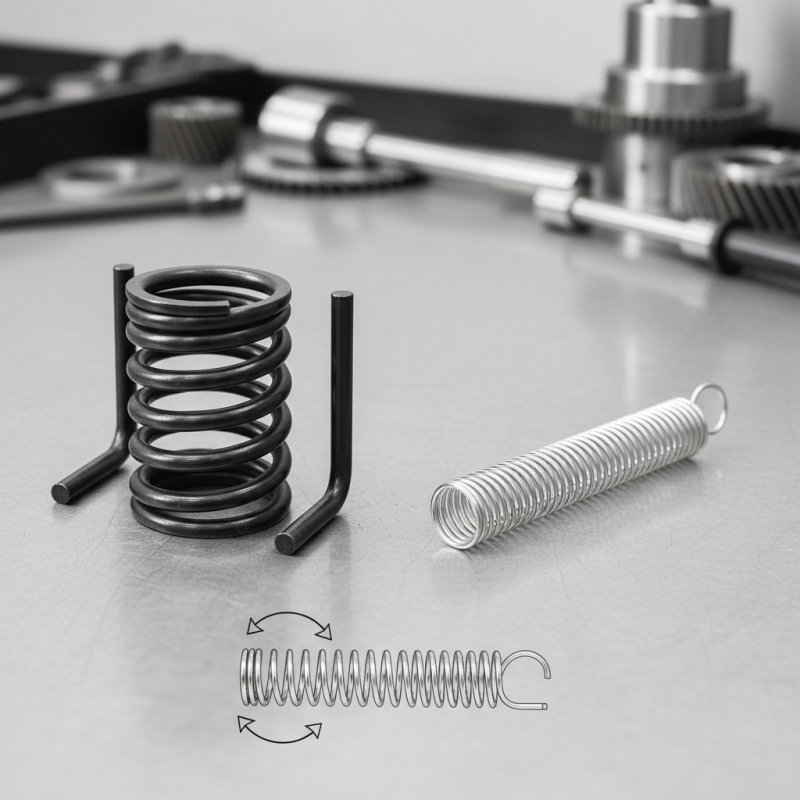
When considering spring choices, people often ask, "What is the difference between a torsion and extension spring?" Torsion springs store energy by twisting. They work effectively in applications requiring rotational motion. Conversely, extension springs absorb energy by being stretched, making them ideal for applications that need tensile strength.

This article will explore these key differences. We will discuss their construction, applications, and advantages. As you read, reflect on which spring type suits your needs. Understanding these variations is crucial for effective and reliable use in mechanical design.
2026 Top Difference Between Torsion and Extension Springs?

Definition and Function of Torsion Springs

Torsion springs are designed to absorb and store energy through rotational movement. They work by twisting around their axis, storing potential energy when rotated. This unique function sets them apart from other spring types. Torsion springs are common in various applications, including garage doors, clothespins, and automotive components.

According to a report from the International Journal of Mechanical Engineering, torsion springs can exert significant force when properly engineered. Their torque capacity can range from a few ounce-inches to thousands of pound-inches. The material used, such as music wire or oil-tempered steel, directly influences their performance. For example, high-carbon steel offers excellent elasticity, allowing for more durable springs.

Despite their advantages, torsion springs can sometimes face failure under extreme conditions or misuse. They require precise calculations in design to avoid problems like premature fatigue. Continuous monitoring and testing are essential to ascertain their effectiveness and longevity in applications. Ignorance of these factors can lead to inefficient designs and unexpected breakages. Thus, understanding the mechanics of torsion springs is vital for any engineering project.

Definition and Function of Extension Springs

Extension springs play a crucial role in many mechanical applications. They are designed to absorb and store energy. When these springs are stretched, they can create a tensile force that pulls back against the applied load. This creates a reliable mechanism for various devices. Their design typically consists of tightly wound coils made from high-carbon steel. This material ensures durability and strength.

The primary function of extension springs is to provide tension. They are commonly used in equipment like screen doors and trampolines. In these cases, the springs assist in keeping components in place. Proper maintenance is essential for optimal performance. Over time, springs may lose their elasticity due to constant use. Regular inspections can help detect signs of wear early.

While they are dependable, extension springs do have limitations. For example, if overstretched, they may suffer permanent deformation. This risk emphasizes the importance of using the right spring for specific applications. Not all projects need the same type of spring. Careful selection is necessary to avoid potential failures.

Key Mechanical Differences Between Torsion and Extension Springs

Torsion and extension springs serve distinct purposes in mechanical applications. Torsion springs store energy by twisting. They exert a torque on their ends when rotated. Commonly used in applications like hinges and door closures, they provide resistance against the applied force.

On the other hand, extension springs work differently. These springs stretch when a force is applied, storing potential energy. They excel in providing pulling force. Applications can include equipment counterbalances and various machinery. Understanding these operational differences is crucial in selecting the right spring for your project.

Both spring types have unique designs. Torsion springs often feature coils wound around an axis, while extension springs have coils wound in a helical shape. These structural differences affect how they respond under load. Torsion springs can create a specific angle, while extension springs must be pulled to function. Recognizing these differences helps in engineering tasks. Awareness of the nuances can improve efficiency and reliability.

Applications of Torsion Springs Versus Extension Springs

Torsion springs and extension springs serve distinct purposes in various applications. Torsion springs store energy when twisted. They are widely used in clothespins, hinges, and garage doors. According to a 2022 industry report, torsion springs constitute about 30% of the total spring market. They excel in applications where rotational motion is required. This capability is vital in devices needing precise control, such as in the automotive and aerospace sectors.

On the other hand, extension springs are designed to absorb and store energy when pulled apart. Commonly seen in trampolines and automotive seats, they make up roughly 40% of the spring market. These springs are integral in applications requiring high tensile strength. A recent study highlighted their role in manufacturing processes, such as assembly lines and conveyor systems. The cyclical nature of extension springs allows for repeatable motion, which can enhance productivity.

While the distinct functions of these springs are clear, choosing the right type can be complex. Evaluating the application’s specific needs is crucial. Incorrect choices can lead to premature failure. Understanding the unique characteristics of torsion and extension springs is essential for optimal design and operational efficiency.

Material and Design Considerations for Both Spring Types

When selecting springs, material and design considerations are crucial. Torsion springs twist to store energy, while extension springs stretch. The material choice influences durability, tension, and yield strength. Common materials include stainless steel and music wire for both spring types, chosen for their strength-to-weight ratio.

It's essential to account for operating conditions. Environmental factors, such as temperature and exposure to chemicals, can affect a spring's performance. For instance, choosing a rust-resistant material may be vital in humid environments. Consider the spring's intended application to determine whether it requires a specific coating or treatment.

Tips: Always test prototypes to ensure they meet specifications. Small variations in design can lead to significant performance differences. Be prepared for adjustments during the design phase. Reflect on the balance between cost and quality; investing in better materials may save money in the long run.

2026 Top Difference Between Torsion and Extension Springs

Attribute Torsion Springs Extension Springs
Function Store rotational energy Store linear energy
Load Type Twisting force Tensile force
Common Materials Music wire, Stainless steel High carbon steel, Galvanized steel
Design Considerations Must account for twist deformation Must allow for stretch and contraction
Applications Door hinges, Mechanical toys Trampolines, Garage doors
Fatigue Resistance Moderate High

FAQS

: What is the main function of torsion springs?

: Torsion springs absorb and store energy through rotational movement by twisting around their axis.

Where are torsion springs commonly used?

They are used in garage doors, clothespins, and automotive components.

What influences the performance of torsion springs?

The material used, such as high-carbon steel, directly affects their elasticity and durability.

How do extension springs function?

Extension springs store energy when stretched, creating a tensile force that pulls back against loads.

Can extension springs lose their effectiveness over time?

Yes, continuous use can lead to loss of elasticity, necessitating regular inspections.

What are the main applications of extension springs?

They are commonly found in screen doors, trampolines, and automotive seats.

What happens if extension springs are overstretched?

Overstretching may cause permanent deformation, highlighting the need for careful usage.

How do torsion springs differ from extension springs?

Torsion springs store energy through twisting, while extension springs do so by being pulled apart.

Why is precise design important for torsion springs?

Poor design can lead to premature fatigue and unexpected breakages, impacting their efficiency.

What should one consider when choosing between torsion and extension springs?

The specific needs of the application are crucial for selecting the right type of spring.

Conclusion

In understanding the question, "What is the difference between a torsion and extension spring," it is essential to first define the two types of springs. Torsion springs are designed to work by twisting actions, providing torque or rotational force, while extension springs operate under tension, stretching to absorb energy. Their key mechanical differences lie in how they store and release energy—torsion springs store energy in the form of angular displacement, whereas extension springs do so through linear displacement.

Applications for these springs vary significantly due to their design. Torsion springs are commonly used in mechanisms such as clothespins and garage doors, where rotational force is necessary. Conversely, extension springs find usage in applications like trampolines and screen doors, where pulling force is required. Additionally, selecting appropriate materials and design considerations is vital for both spring types, ensuring they meet specific functional demands in their respective applications.

Henry

Henry

Henry is a dedicated marketing professional with a profound expertise in the company's offerings. With years of experience in the industry, he possesses an impressive understanding of the market dynamics and consumer behaviors that drive success. Henry is committed to sharing his insights through......