How to Improve Food Safety with High Speed Doors?

Time:2026-10-09 Author:Isabella
0%

Food safety depends on more than clean surfaces and careful handling. Every opening between rooms can introduce dust, insects, temperature changes, and unwanted airflow. In a busy food plant, a traditional door may remain open for several minutes during each transfer. That small delay can affect hygiene, energy use, and production flow.

High speed doors create a faster separation between processing zones, storage areas, and loading points. Their rapid opening and closing can reduce exposure time while helping maintain controlled temperatures. They may also support smoother movement for forklifts, carts, and employees. What are the benefits of high speed doors in food processing? The answer includes improved traffic control, reduced air exchange, easier sanitation planning, and better environmental stability. These benefits depend on proper installation and daily maintenance.

Details matter. A door curtain should close fully. Sensors must respond reliably. Damaged seals cannot be ignored. Regular inspections can identify worn tracks, loose hardware, or cleaning problems before they affect operations. Stainless steel surfaces and hygienic designs may simplify cleaning, but no door can replace employee training or a verified food safety plan.

That is the practical reality.

High speed doors are helpful controls, not complete solutions. Their value should be measured against room temperatures, traffic frequency, cleaning routines, and product risks. A well-designed system supports documented procedures and follows applicable food safety requirements. Still, each facility has different weaknesses. Careful observation, recorded maintenance, and periodic review are necessary to confirm that the doors deliver dependable protection.
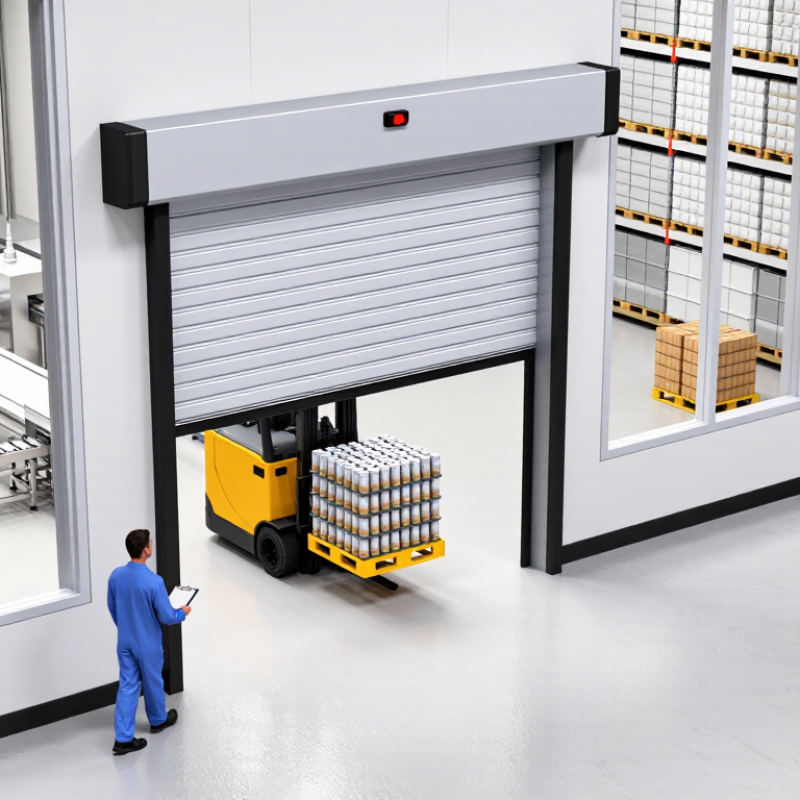
How to Improve Food Safety with High Speed Doors?

Map HACCP Zones and Identify Door-Related Food Safety Risks

Improving food safety with high speed doors begins with a clear HACCP zone map. Mark raw material areas, preparation rooms, cooking spaces, chilled storage, packaging zones, and dispatch routes. Show every doorway between zones. Include pedestrian paths, pallet traffic, waste movement, and cleaning access. A simple floor plan may reveal unexpected cross-traffic.

Door-related risks deserve close attention. A door that remains open can allow dust, insects, warm air, or aerosols to enter a controlled area. Slow movement may also encourage workers to bypass the door. Check opening speed, closing speed, safety sensors, seals, and visible damage. Record temperature and humidity near critical doorways. Watch for condensation around cold rooms. Small details matter.

Not every risk comes from the door itself. Poor traffic discipline can defeat good equipment. Operators may touch controls with gloved hands after handling raw materials. Pallets can strike frames and create gaps. Cleaning chemicals may leave residue on nearby surfaces. These findings should appear in the hazard analysis, not only in maintenance records. Verification should include inspection logs, sensor tests, cleaning checks, and staff observations. A map is never perfect. Production changes, seasonal airflow, and new equipment can create risks later. Review the zones after layout changes, incidents, or repeated door faults. High speed doors support control, but they cannot replace disciplined procedures.

Maintain Cold Storage at ≤5°C Under FDA Food Code Requirements

How to Improve Food Safety with High Speed Doors?

Maintain Cold Storage at ≤5°C Under FDA Food Code Requirements

Cold storage protects temperature-controlled food from bacterial growth and quality loss. The FDA Food Code generally requires cold holding at 5°C (41°F) or below. High speed doors help maintain this limit by reducing open time and limiting warm, humid air exchange. Every second matters. A door that closes quickly still needs reliable seals, sensors, and regular cleaning. Condensation around the frame can signal air leakage or poor room balance.

Tips: Install a visible temperature display near the entrance. Record temperatures at scheduled intervals. Keep pallets away from the doorway. Test door safety sensors every week. Clean food residue from tracks promptly.

Daily operations often reveal weaknesses that installation teams miss. During receiving, workers may leave the door open while checking labels or moving several pallets. This can raise room temperature quickly, especially during busy periods. Use strip curtains or a controlled staging area when practical. Train employees to open the door only when needed. Place calibrated thermometers in warm spots, not only near the cooling unit. Review records for repeated fluctuations. A single reading may look acceptable, but the pattern can expose a problem. Maintenance should check closing speed, hinges, seals, and sensor response. Local authorities may adopt different versions of the FDA Food Code, so verify applicable requirements before changing procedures.

How to Improve Food Safety with High Speed Doors? - Maintain Cold Storage at ≤5°C Under FDA Food Code Requirements

Food-Safety Dimension Reference Requirement or Control Target How High-Speed Doors Help Verification Data
Cold-holding temperature Keep time/temperature control for safety (TCS) food at 5°C (41°F) or below, unless a specific exception applies. Fast opening and closing helps limit warm-air infiltration and reduces the duration of temperature fluctuations. Record product or air temperature at scheduled intervals and after extended door activity.
Cooling cooked TCS food Cool from 57°C to 21°C (135°F to 70°F) within 2 hours, and from 57°C to 5°C (135°F to 41°F) within a maximum of 6 hours. Maintains a more stable cold-room environment after food is transferred into storage; it does not replace approved cooling methods. Document cooling start time, intermediate temperature, final temperature, and corrective action when limits are missed.
Door-open exposure The FDA Food Code does not prescribe one universal high-speed-door cycle time; the operation should control exposure to maintain safe temperatures. Use high-speed operation, automatic closing, and suitable activation sensors to minimize the time the opening remains exposed. Track door-open duration, opening frequency, and cold-room temperature trends during peak traffic periods.
Airflow and temperature stability Cold storage equipment must be operated and maintained to protect TCS food from temperature abuse. A properly fitted door can reduce uncontrolled air exchange compared with a door that remains open or is frequently left ajar. Check temperature mapping at representative locations, including areas near the doorway and product storage zones.
Cross-contamination prevention Store food, equipment, and utensils in a way that prevents contamination; protect food from splash, dust, and other contamination. Rapid closure reduces the time the storage area is exposed to traffic, airborne particles, and unnecessary handling. Inspect door curtains, seals, guides, and surrounding surfaces for damage, soil, condensation, or pest-entry points.
Condensation and ice control Food-contact and food-storage areas must be maintained in a clean and sanitary condition; condensation must not contaminate food or food-contact surfaces. Reducing warm, humid air entry can help limit condensation and frost formation around the opening when the system is correctly designed and maintained. Inspect floors, door tracks, evaporators, and nearby shelving for water, ice, or dripping condensation.
Temperature monitoring Use an appropriate temperature-measuring device and maintain monitoring records according to the operation’s food-safety procedures. Stable door operation makes temperature trends easier to interpret and can help identify abnormal traffic or equipment conditions. Use calibrated instruments; compare displayed air temperature with representative product temperatures.
Corrective action When TCS food is above the applicable limit, evaluate time and temperature exposure and follow the establishment’s approved corrective-action procedure. Door alarms, interlocks, and preventive maintenance can help identify or reduce operational conditions that cause temperature excursions. Record the time, measured temperature, affected food, disposition, root cause, and repair or process adjustment.
Preventive maintenance Food-establishment equipment must be maintained in good repair and operated according to its intended use. Routine inspection of sensors, motors, seals, safety edges, and closing mechanisms helps preserve consistent door performance. Maintain a service log covering inspection date, component condition, corrective work, and next scheduled inspection.

Note: The FDA Food Code establishes food-safety requirements, while specific high-speed-door operating targets should be validated for the facility, room design, traffic pattern, equipment, and documented food-safety plan.

Specify High-Speed Doors with 1–2 m/s Opening and Closing Cycles

How to Improve Food Safety with High Speed Doors?

In food facilities, high-speed doors help separate raw, cooked, chilled, and dispatch areas. Specify opening and closing cycles between 1 and 2 m/s. This speed limits the time an opening remains exposed. It can reduce dust movement, insects, and temperature loss. A fast door is not automatically safer. Its performance depends on sensors, seals, traffic patterns, and maintenance.

For example, a door beside a washdown station needs corrosion-resistant components and reliable controls. Operators should verify cycle speed during commissioning, not rely only on specifications.

Tips: Match the door speed to the workflow. A 1 m/s cycle may suit careful pallet movement, while 2 m/s can support busy production routes. Use presence sensors that detect low carts and forklifts. Check the bottom seal weekly. Record faults, unusual noise, and delayed closing. Small observations matter.

Cleaning routines also require practical testing. Water spray, foam, and temperature changes can affect sensors and flexible curtains. Schedule inspections after sanitation, when residue is easiest to identify.

I have seen teams focus on opening speed while ignoring closing delays. That mistake can leave rooms exposed during peak traffic.

Staff training should cover safe approach distances, emergency release procedures, and reporting requirements. Review the settings after seasonal changes or layout adjustments. The best specification is the one that remains reliable under real working conditions.

Use IP65-Rated, Washdown-Safe Materials for Hygienic Door Surfaces

How to Improve Food Safety with High Speed Doors?

Use IP65-Rated, Washdown-Safe Materials for Hygienic Door Surfaces

High-speed doors can reduce open time between production zones. However, speed alone does not create food safety. Door surfaces must withstand frequent cleaning, splashing, and daily contact with wet gloves. IP65-rated components are dust-tight and protected against water jets under IEC 60529. That protection matters near washdown areas, where exposed gaps can collect moisture and residue.

The World Health Organization estimates that contaminated food causes 600 million illnesses and 420,000 deaths worldwide each year. These figures show why small hygiene weaknesses deserve attention. The FDA Food Code 2022 also emphasizes smooth, durable, nonabsorbent, and easily cleanable surfaces. Washdown-safe materials support these requirements by reducing crevices, corrosion, and trapped soil. Yet IP65 is not a complete hygiene solution. Seals, fasteners, floor edges, and control panels still need inspection. A perfect specification can fail during poor installation.

Tips: Choose stainless or similarly durable hygienic materials. Check door curtains and seals after every intensive wash. Use low-residue cleaning agents approved for food environments. Document cleaning frequency and surface damage. Test drainage around the doorway, not only the door itself. Shortcuts happen. Review them openly.

A practical maintenance record should note water pressure, temperature, chemical concentration, and visible wear. These details help connect cleaning results with door performance. They also reveal an uncomfortable truth: operators may clean the door thoroughly while missing the surrounding floor joint. Independent verification and routine ATP testing can expose that gap, although test results should support—not replace—trained inspection.

Verify Performance Through ISO 22000 Audits and Documented Inspections

How to Improve Food Safety with High Speed Doors?

High speed doors can reduce open time between production zones. This helps limit dust, insects, temperature shifts, and uncontrolled air movement. However, a fast door is not automatically a safe door. Its performance must support the site’s ISO 22000 food safety management system.

During an ISO 22000 audit, inspectors should review door-related hazards and control measures. They may check closing speed, sensor response, seals, emergency operation, and cleaning access. Documented inspections should record the date, door location, observed condition, and responsible employee. Temperature readings and airflow concerns deserve attention too. Small gaps can matter.

Keep evidence clear and traceable. A simple inspection log can show repeated faults before they become serious. Maintenance records should connect each repair with its corrective action and verification. In practice, teams sometimes record “door checked” without useful details. That is weak evidence. We learned that photos, measured closing times, and signed follow-up checks create more reliable audit trails. Records should not be written only before an audit.

Employees need practical training. They should know when to stop production, report damage, or isolate a faulty door. Auditors may interview them, not just review paperwork. A perfect record is unrealistic. Missing entries should be investigated honestly, with preventive actions documented. This openness strengthens reliability and reveals where the inspection process itself needs improvement.

FAQS

Why should a facility create a HACCP zone map?

A zone map shows raw material, preparation, cooking, chilling, packaging, and dispatch areas. It also marks every doorway and traffic route. Simple layouts can reveal hidden cross-traffic. The map is never perfect.

What door problems can threaten food safety?

Open doors may admit dust, insects, warm air, or airborne particles. Slow doors can encourage workers to bypass them. Check closing speed, sensors, seals, tracks, and visible damage. Small gaps matter.

How can high speed doors support chilled storage?

Fast closing reduces warm, humid air entering the room. Keep chilled storage at 5°C or below when applicable requirements demand it. Use a visible thermometer near the entrance. Check warm spots, not only cooling equipment.

What daily practices help protect cold rooms?

Open doors only when needed. Keep pallets away from entrances and use a staging area when practical. Record temperatures at planned intervals. Clean food residue from tracks quickly. Busy receiving periods need extra attention.

What should staff inspect around a food safety door?

Inspect sensors, seals, hinges, closing speed, emergency operation, and cleaning access. Look for condensation around cold-room frames. Record temperature and humidity near critical doorways. A single check can mislead.

How should door inspections support an ISO 22000 system?

Records should include the date, location, condition, and responsible employee. Add measured closing times, temperature readings, photographs, and follow-up checks. “Door checked” is weak evidence. Details create traceability.

What should happen when a door becomes damaged?

Staff should report damage immediately and follow site procedures. Production may need to pause or the area may need temporary isolation. Maintenance should document the repair and verification. Do not hide missing records.

Can a fast door replace good hygiene procedures?

No. Traffic discipline, hand hygiene, cleaning, and staff training remain essential. Workers should avoid touching controls after handling raw materials. Review zones after layout changes, incidents, seasonal airflow shifts, or repeated faults.

Conclusion

Improving food safety with high speed doors begins by mapping HACCP zones and identifying risks linked to door movement, air exchange, traffic, and possible contamination. Doors should support cold-storage control at or below 5°C in line with FDA Food Code requirements, while opening and closing at approximately 1–2 m/s to reduce temperature loss, pest access, and airborne contamination. What are the benefits of high speed doors in food processing? They help separate hygiene zones, maintain stable environmental conditions, improve workflow efficiency, and reduce the time openings remain exposed.

For hygienic performance, door surfaces and components should use IP65-rated, washdown-safe materials that can withstand routine cleaning without creating hidden contamination points. Facilities should also verify door speed, sealing, temperature stability, cleaning condition, and operational reliability through documented inspections. Regular ISO 22000-based audits can confirm that door controls remain consistent with the site’s food safety management system, while corrective-action records provide evidence of ongoing monitoring and improvement.

Isabella

Isabella

Isabella is a dedicated marketing professional with a sharp focus on driving brand growth and engagement through strategic content creation. With an extensive background in digital marketing, she combines her passion for storytelling with her keen understanding of industry trends to deliver......