2026 How to Reset a Commercial Door Operator After Power Loss

Time:2026-11-05 Author:Liam
0%

A power loss can leave a commercial door halfway open, unresponsive, or showing a fault light. The right recovery depends on the operator model, door type, and control system. How to reset a commercial door operator after power failure is therefore not a one-switch answer. A sectional garage door, rolling steel door, and fire-rated opening may follow different procedures.

Industry guidance supports a cautious approach. UL 325 sets safety requirements for door and gate operators, while NFPA 80 addresses inspection and testing of fire doors. DASMA’s technical guidance also emphasizes following manufacturer instructions and maintaining safety devices. The U.S. Energy Information Administration tracks outage frequency and duration in its electric reliability data; that context explains why power interruptions matter, but it does not prescribe a door reset. Check the operator label and manual before restoring operation.

Small details matter. Note whether the door is fully closed, whether the photo-eyes are aligned, and whether the display shows a code. Do not force a door that feels unusually heavy or binds on its track. Stop there. Some operators need a limit or travel check after power returns; others resume normally. Real sites are messier than manuals suggest, and that is worth acknowledging. This guide explains safe, practical checks for 2026, while keeping model-specific repairs with a qualified door technician. If the opening protects a fire compartment, use the applicable inspection procedure before returning it to service.
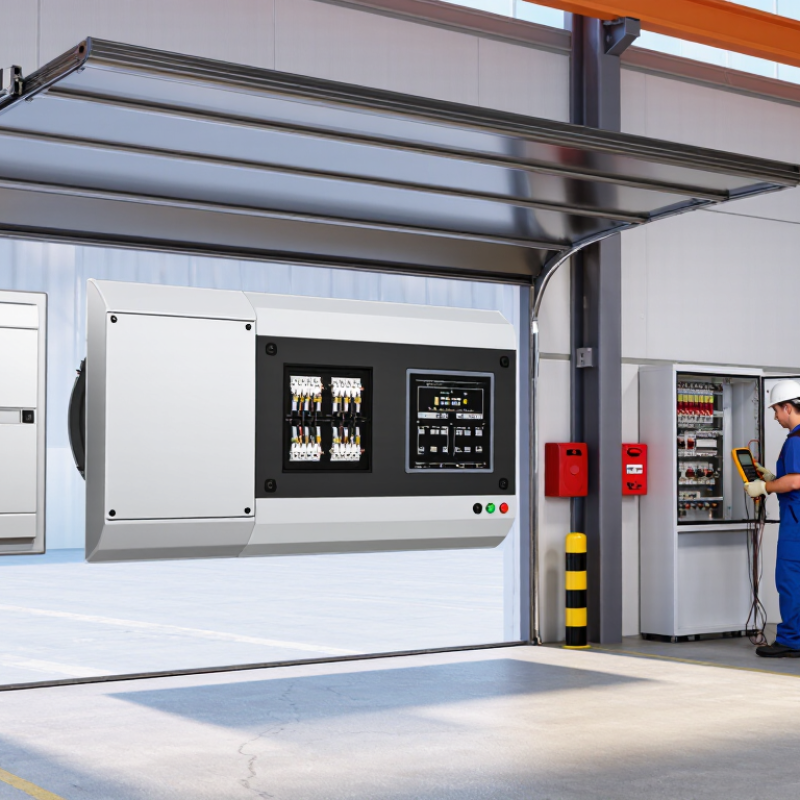
2026 How to Reset a Commercial Door Operator After Power Loss

Identify the Operator Model, Nameplate Voltage, and UL 325 Listing

After a power loss, record the commercial door operator’s model before attempting a reset. The model identifies the correct wiring diagram and manufacturer instructions. Read the nameplate for input voltage, phase, frequency, and amperage. Do not infer voltage from a plug or nearby equipment. Do not guess. A 208-volt supply and a 230-volt-rated operator are not automatically interchangeable. Confirm the supply with a qualified technician and compare it with the operator’s marked ratings. The U.S. Department of Energy’s 2023 U.S. Industrial and Commercial Motor System Market Assessment reports that motor-driven systems use about 54% of U.S. manufacturing electricity, underscoring why correct motor and supply matching matters.

Then check that the complete operator’s UL 325 listing matches its installed configuration. UL 325 covers door and gate operators and related systems; a label alone does not confirm that field wiring or safety devices are correct. Check the manual for the listed operator type and required entrapment-protection devices. Inspect photoelectric sensors and the monitored edge for damage, loose connections, or blocked paths before restoring operation. Never bypass them to make a reset succeed. Small detail. I still double-check the phase; a clear nameplate can be easier to misread than expected. If the listing, voltage, or safety setup is uncertain, stop and have a qualified door technician verify it. My first assumption would not be the right one every time.

Secure the Door and Check Its Manual Release Before Power-Up

After a power loss, keep the operator’s supply isolated so it cannot restart unexpectedly. Secure the door in a stable position using the site’s approved method. Keep people, carts, and tools out of its travel path. A heavy door can move with little warning. Do not rely on the operator alone to hold it.

Before restoring power, find the manual release instructions for this specific door system. Release mechanisms vary, so do not guess or force a handle that resists. Check that the door is not crooked and that cables, tracks, and visible hardware show no obvious damage. Do not touch springs or attempt repairs to tensioned parts. If the door feels unusually heavy or will not move smoothly, stop and contact a qualified technician. That pause may feel fussy. It is better than testing your guess on a suspended door.

When the manual confirms the release is correctly reset, clear the area and restore power. Stand away from the door’s path during the first controlled operation. Watch for jerking, unusual noise, or failure to stop at its normal limits. If anything seems wrong, cut power again and arrange service. A quick visual check is useful, but it cannot confirm that hidden components are safe.

2026 How to Reset a Commercial Door Operator After Power Loss - Secure the Door and Check Its Manual Release Before Power-Up

Use this general safety checklist after an outage. Operator designs and release procedures differ, so follow the specific equipment manual and site procedures.

Stage What to check or do Why it matters Stop and get qualified help if…
1. Secure the area Keep people, vehicles, and equipment clear of the doorway and the door’s travel path. Do not stand beneath a suspended or partially open door. A door can move unexpectedly if its balance, restraint, or operator condition has changed. The door is moving, unstable, visibly damaged, or cannot be kept clear of the opening.
2. Inspect the door From a safe position, look for a door that is off its tracks, hanging unevenly, obstructed, or showing damaged cables, springs, hinges, or other hardware. Power restoration does not correct mechanical faults. Operating a damaged door can worsen the problem. Any load-bearing part appears damaged, loose, displaced, or under unusual tension. Do not attempt repairs to springs or cables.
3. Identify the manual release Locate the release described in the operator’s manual. Check its condition and understand how it reconnects the door to the operator before using it. Release designs and operating sequences vary. Incorrect use may leave the door free to move or prevent proper re-engagement. The release is missing, damaged, inaccessible, unfamiliar, or its operation is unclear. Do not pull an unidentified cord or lever.
4. Control the door before release Follow the manufacturer’s procedure for supporting or securing the door before disengaging the operator. Keep hands clear of pinch points. When disengaged, the door may no longer be held by the operator. A poorly balanced door can move under its own weight. The door cannot be safely controlled, feels unusually heavy, or moves on its own. Keep it out of service.
5. Check power and controls Confirm that the supply and disconnect are in the correct state according to the manual. Check for visible water, impact, scorching, loose covers, or damaged wiring without opening electrical enclosures. Power should not be restored to equipment with apparent electrical or environmental damage. There is burning odor, heat, water intrusion, exposed wiring, repeated breaker operation, or an unknown electrical fault.
6. Restore power as directed Only after the door and equipment are safe, restore power using the documented procedure. Keep the doorway clear and do not bypass safety devices. The correct startup sequence may depend on the operator, accessories, and site installation. The manual requires a technician, the operator shows a fault, or power does not restore normally.
7. Re-engage and test Reconnect the operator exactly as directed. Test operation only when the opening is clear, and verify required entrapment-protection devices using the manufacturer’s test procedure. Correct engagement and functioning protective devices are necessary for safe powered operation. The operator runs unexpectedly, the door binds or reverses abnormally, the release will not re-engage, or a safety device fails its test.
8. Record the reset Note the outage, visible condition, actions taken, any fault indication, and whether the door was returned to service. Report unresolved problems to the responsible facilities contact. A clear record helps maintenance staff identify recurring faults and avoid unsafe assumptions at the next startup. The cause of a fault is unknown or safe operation cannot be confirmed. Leave the door out of service and arrange inspection.

Important: This checklist is not a substitute for the operator’s manual, site lockout procedures, or inspection by a qualified door technician. Never work on energized electrical components or attempt to adjust door springs, cables, or other high-tension parts.

Verify Supply Voltage and Control-Board Status Against Manufacturer Data

After a power loss, do not assume the operator’s reset button is the problem. Check the supply at the disconnect and controller input with a properly rated meter, then compare readings with the operator’s wiring diagram and nameplate. Record voltage during startup too; a normal idle reading can hide a brief drop under load.

IEEE Std 1159-2019 classifies a voltage sag as 0.1–0.9 per-unit voltage lasting from half a cycle to one minute. That range is useful context, not a substitute for the equipment’s specified limits.

Inspect the control board for a status light or fault code, and note its exact pattern before cycling power. Confirm that control voltage, fuses, and safety-device inputs match the manufacturer’s service data.

NEMA MG 1 guidance for three-phase motors treats voltage unbalance above 1% as a condition requiring attention; this is not a universal limit for every door operator.

If supply voltage is outside specification, or the board remains unresponsive, isolate the equipment and have a qualified technician test it. A quick reset may seem to work, but it can erase a useful fault clue. Recheck readings at the board terminals, not just at the wall.

Reset the Operator Using the Model-Specific Power-Loss Procedure

After a power loss, a commercial door operator may retain its settings, or it may require a model-specific reset. Check the operator’s identification label and locate the matching installation or service instructions. Do not assume that a flashing light or a silent motor means the same thing on every unit. Keep people, vehicles, and stored items clear of the door’s travel path. Secure the door against movement before following any steps that require access to the operator.

Restore power only as directed by the instructions, then use the specified reset sequence. Depending on the model, this may involve a control button, a key switch, or relearning travel limits. Follow the stated order and timing. Avoid changing force settings or bypassing safety devices to make the door move. Test the door from its normal controls, watching its full travel and confirming that safety features respond. A detail can be easy to miss: some operators need limits checked after an interruption. If the procedure is unclear, the door moves unexpectedly, or a safety device fails, stop using it and contact a qualified service technician. Don’t keep cycling it.

Test Entrapment Protection and Reversal Functions per UL 325

2026 How to Reset a Commercial Door Operator After Power Loss
Test Entrapment Protection and Reversal Functions per UL 325

After power returns, a commercial door operator may need its settings checked before normal use. Keep the doorway clear, and follow the operator’s service instructions. Reset procedures differ by model; travel limits or force settings may need attention. Do not guess. If controls behave unexpectedly, stop and contact a qualified door technician.

Test each entrapment-protection device using the procedure and test object specified for the installation. Check that photoelectric sensors are clean, aligned, and unobstructed. Test the monitored safety edge, if fitted. Then verify the door’s reversal response with the approved test method. Never use a hand, foot, or person as an obstruction. Keep people clear. The door should respond as specified for that operator and setup; a failed or inconsistent test means it should remain out of service until inspected. Power-loss resets can leave small issues behind, and I would not treat one successful cycle as proof that every safeguard works. Record the test results and any adjustments for future service.

2026 How to Reset a Commercial Door Operator After Power Loss

Test Entrapment Protection and Reversal Functions per UL 325

How to read this chart: The bars show the order of the steps, not measured time or performance data. Follow the operator’s instructions for the specific reset procedure. Keep people clear of the door during testing. If entrapment protection or reversal does not respond as specified, stop using the door and have it inspected by a qualified technician.

FAQS

What should I do before restoring power to a door operator?

Keep the supply isolated and secure the door using the site-approved method. Clear people, carts, and tools from its travel path.

Can I use the manual release without checking the instructions?

No. Release mechanisms vary by model. Check the specific instructions, and never force a resistant handle.

What signs mean I should stop and call a technician?

Stop if the door looks crooked, feels unusually heavy, moves roughly, or has visibly damaged cables or tracks. Do not touch springs.

How should I check the power supply after an outage?

A qualified person can measure voltage at the disconnect and controller input with a properly rated meter. Compare readings with the equipment’s specifications.

Why check voltage during startup?

A brief voltage drop may appear only under load. Record startup readings too. Idle readings can miss it.

What should I note on the control board?

Record the exact status-light pattern or fault code before cycling power. A reset might erase a useful clue.

Does every operator use the same reset sequence?

No. Find instructions matching the unit’s identification label. Follow the stated button, key-switch, and timing steps.

What should I watch during the first operation?

Stand clear and watch the full travel. Look for jerking, unusual noise, or failure to stop normally. Small details matter.

Should I change force settings if the door will not move?

No. Do not bypass safety devices or keep cycling the operator. Stop using it if movement seems unexpected; call a qualified technician. A pause can feel fussy.

Conclusion

This guide explains How to reset a commercial door operator after power failure by starting with identification and safety. Check the operator’s model, nameplate voltage, and UL 325 listing so you can follow the correct instructions for that equipment. Before restoring power, secure the door against movement and inspect the manual release, using the manufacturer’s guidance to confirm the door is stable and properly engaged.

Next, verify that the supply voltage and control-board status match the manufacturer’s data. Follow the model-specific procedure to restore or reset the operator rather than relying on a generic sequence. Once power is restored, test the door’s operation and confirm that entrapment protection and reversal functions respond as intended. If the operator behaves unexpectedly, stop testing and consult a qualified door-service professional before returning it to regular use.

Liam

Liam

Liam is a dedicated marketing professional with a profound expertise in the industry, where he excels at highlighting the unique advantages of our core products. With a keen understanding of market trends and consumer needs, Liam frequently updates our company’s professional blog, providing......