A leaking dock leveler can turn a routine loading task into a serious operational problem. Oil may appear beneath the lip, around the cylinder, or along a hose connection. However, the visible puddle is not always the leak’s true source. Oil can travel across steel surfaces before dripping onto the floor.
This guide explains How to troubleshoot a dock leveler hydraulic leak using practical inspection methods and manufacturer-based guidance. Experienced maintenance teams usually begin with the equipment’s service history, hydraulic fluid level, and recent operating changes. A slow platform descent, uneven movement, or unusual pump noise may indicate more than a loose fitting. Small details matter.
Safety comes first.
Before inspection, isolate the dock leveler according to the manufacturer’s procedure. Support the deck mechanically, release stored hydraulic pressure, and keep hands away from moving parts. Never rely on hydraulic pressure alone to hold a raised platform. A qualified technician should repair damaged cylinders, hoses, valves, or welds.
Look closely. Use a clean cloth to trace fresh oil, rather than guessing from an old stain. Check hose crimps, cylinder seals, reservoir fittings, and the pump manifold. Wipe the area, cycle the equipment only when safe, and inspect again. This method is simple, but it can reveal overlooked seepage.
Not every hydraulic leak requires the same repair. Tightening a fitting may help, yet overtightening can damage threads or seals. Replacing a hose without identifying the cause may only delay another failure. Careful diagnosis, documented measurements, and approved replacement parts create a more reliable repair decision.
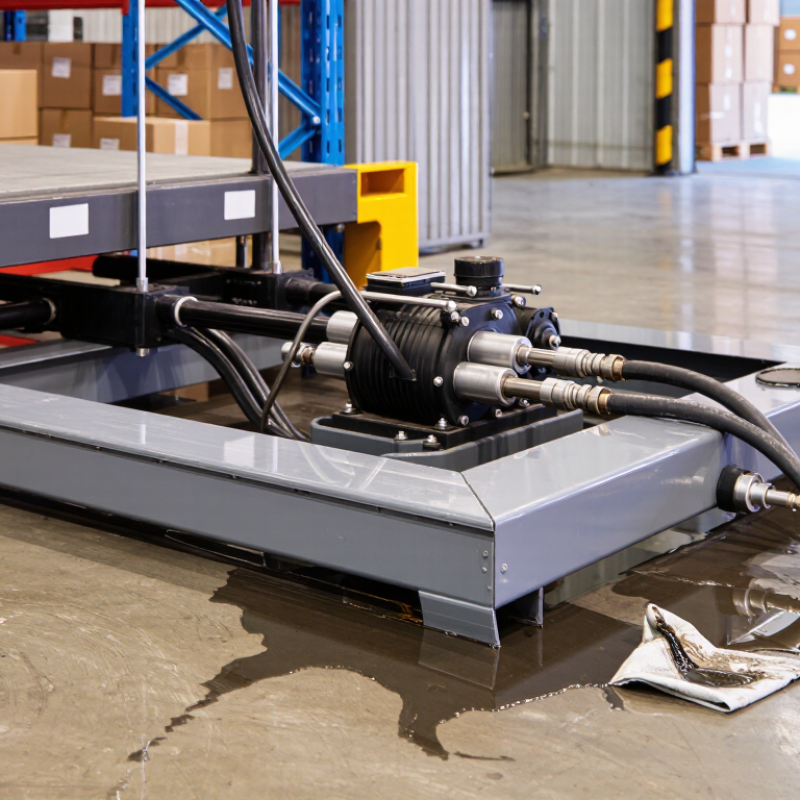
Before troubleshooting a dock leveler, treat every hydraulic leak as a possible stored-energy hazard. A raised platform can drop without warning. Keep people away from the pit, loading edge, and travel path. Park the vehicle, stop operations, and follow the site’s lockout procedure. Wear safety glasses, oil-resistant gloves, and protective footwear. Never search for a pinhole leak with your hand. Pressurized fluid can enter skin, even when the opening looks harmless. Use cardboard or clean wood instead. If oil contacts skin, seek urgent medical care. Do not guess.
Once the equipment is secured and pressure is relieved by a qualified technician, inspect the hose ends, fittings, cylinder rod, reservoir, and deck underside. Fresh oil usually looks wet and gathers below the active point. Old residue may appear dark, dusty, or sticky. Wipe suspect areas with an approved rag, then cycle the leveler only under controlled conditions. Watch for a new sheen. Check the reservoir level against the service specification, but do not assume low fluid proves a leak. Spilled oil, condensation, or worn grease can mislead you. I have seen a fitting blamed when the damaged hose was several inches away. A mirror and flashlight can reveal the trail. Record the location, fluid color, operating position, and photographs. Stop work immediately if the leak worsens, movement becomes uneven, or the pump sounds strained. A second inspection is often worthwhile; rushed confirmation creates expensive mistakes.
Top Ways to Troubleshoot a Dock Leveler Hydraulic Leak
A hydraulic leak needs a careful inspection, not a quick wipe. Shut down the dock leveler and isolate its energy source. Safety comes first. Place absorbent pads beneath the equipment. Clean the frame, hoses, and cylinder with an approved degreaser. Then operate the leveler briefly and watch for fresh oil. A clean surface reveals the real leak path.
Inspect hoses for cracks, rubbed areas, bulges, and damp sections near bends. Pay close attention to hose ends. Loose fittings can leak under pressure, while overtightened fittings may damage threads or seals. Check valves for oil around plugs, cartridges, and adjustment points. A valve can look dry while pressure is present inside. Use a clean piece of cardboard to trace spray safely. Never use your hand.
Cylinder seals deserve close attention. Oil around the rod often indicates a worn rod seal, especially when leakage increases during lifting. Check the rod for rust, scoring, or a bent section. These defects can quickly damage a replacement seal. A technician should confirm pressure with a calibrated gauge before replacing parts. I have seen fittings blamed for leaks caused by a damaged cylinder rod. That mistake wastes time. Replace failed seals with compatible parts, torque connections correctly, and test the leveler through several complete cycles. Recheck every connection afterward, because a leak may appear only under load.
A leaking dock leveler often starts with an overlooked fluid check. Park the platform safely, release stored pressure, and inspect the reservoir sight glass. The fluid should reach the marked operating range. Low fluid can draw air into the pump, causing whining, jerky movement, and weak lifting force.
Fluid quality matters just as much. Dark fluid, foam, burnt odors, or visible particles suggest contamination or overheating. Industry maintenance studies, including data cited by the National Fluid Power Association, commonly attribute about 70% of hydraulic failures to contamination. ISO 4406 also provides a recognized method for reporting fluid cleanliness.
Do not simply add new oil to dirty fluid. A laboratory sample can reveal water, metal wear, or incorrect viscosity. That small test may prevent a larger repair.
Connect a calibrated gauge at the test port and compare the reading with the service specification. Excess pressure can damage seals, hoses, and cylinders. Low pressure may indicate pump wear, a relief-valve problem, or internal leakage. I have seen technicians tighten fittings first, then discover the real issue was aerated fluid. That assumption wastes time.
Wipe the reservoir cap before opening it. Check hoses for wet bands, not only dripping oil. Record fluid level, temperature, and pressure during each inspection. Never place hands near a suspected pinhole leak. A stiff piece of cardboard can help locate spray safely.
A leaking dock leveler needs more than a quick wipe and a tighter fitting. Hydraulic oil around the cylinder rod, hose crimp, or control valve often shows where pressure escapes. The U.S. Bureau of Labor Statistics recorded about 2.6 million nonfatal workplace injuries in private industry during 2023. That broad figure does not isolate dock equipment, but it reinforces the need for disciplined maintenance. Lock out the leveler, block moving parts, and release stored pressure before inspection.
Repair or replace damaged hydraulic components based on condition, not convenience. A worn seal may justify a cylinder rebuild when the rod remains smooth and straight. Deep scoring, bent rods, cracked ports, or damaged cylinder barrels usually require replacement. Replace hoses with matching pressure, temperature, and length ratings. Never control a leak with tape or a hand near a suspected pinhole. High-pressure fluid can penetrate skin with little visible warning.
Clean the area first. Then cycle the leveler under controlled conditions and inspect for fresh oil. The ISO 4413 hydraulic safety standard emphasizes contamination control, pressure management, and safe maintenance practices. In field work, technicians sometimes replace a seal before checking the rod surface. That mistake can cause another leak within days. Record the failed component, oil condition, operating symptoms, and test pressure. A second inspection helps, especially when the leak appears intermittent.
Top Ways to Troubleshoot a Dock Leveler Hydraulic Leak?
Test the dock leveler before returning it to service. Start with lockout procedures and clean the pit floor. Look for fresh oil around hoses, fittings, the cylinder rod, and the reservoir. Never search for a pinhole leak with your bare hand. Pressurized fluid can penetrate skin. Use cardboard or a suitable inspection tool instead.
Cycle the leveler without a vehicle or load. Watch the platform rise, hold, and return smoothly. A slow drop may indicate internal seal failure, trapped air, or a damaged check valve. A qualified technician should verify system pressure with a calibrated gauge. Record the reading, leak location, fluid level, and repair date. Small details matter. I have found that rushed inspections often miss oil beneath the lip plate.
Prevention requires more than replacing one seal. Inspect hydraulic hoses, fittings, welds, and guards during scheduled maintenance. Replace cracked hoses before they burst. Keep the pit dry and remove oil immediately. The U.S. Bureau of Labor Statistics reported 865 fatal workplace falls, slips, and trips in 2022. Liberty Mutual’s 2024 Workplace Safety Index estimated same-level falls cost employers about $10.4 billion in 2022. Those figures include many hazards, but a leaking leveler can create one directly. Maintenance records should be reviewed after each repair, because the first fix is not always the final fix.
| Inspection Area | Common Leak Symptom | Recommended Test or Check | Likely Cause | Corrective Action | Prevention Measure |
|---|---|---|---|---|---|
| Hydraulic hoses | Oil appears along the hose or collects beneath the dock leveler. | Lower the equipment safely, relieve hydraulic pressure, and inspect hoses for wet areas, abrasions, bulges, or cracks. Never use bare hands to locate a pressurized leak. | Age, abrasion, excessive bending, heat exposure, or pressure damage. | Replace damaged hoses with correctly rated hydraulic hoses. Do not temporarily seal a leaking hose with tape or clamps. | Route hoses away from sharp edges and moving components, and inspect them during scheduled maintenance. |
| Fittings and connections | Small drops or an oily ring are visible around a threaded or compression fitting. | Clean the connection, operate the leveler through a complete cycle, and check whether fresh oil reappears. | Loose connection, damaged sealing surface, incorrect thread sealant, or vibration. | Depressurize the system, tighten the fitting to the proper specification, or replace the fitting and seal if damaged. | Verify connection tightness during inspections and prevent hoses from pulling on fittings. |
| Hydraulic cylinder | Oil forms a film around the rod, or the leveler slowly settles under load. | Inspect the rod for scoring and check for oil at the rod seal after several lift-and-lower cycles. Use approved support devices before working underneath. | Worn rod seal, scratched piston rod, contamination, or cylinder misalignment. | Repair or replace the cylinder seal assembly and correct any alignment problem. Replace a badly damaged rod. | Keep the rod clean, avoid side loading, and follow the equipment service interval. |
| Reservoir and fluid level | The reservoir level is low, or fluid is visible around the tank, cap, or drain area. | Check the fluid level with the dock leveler in the manufacturer-specified position and inspect the reservoir, cap, welds, and drain plug. | Overfilling, loose drain plug, damaged gasket, cracked reservoir, or fluid loss elsewhere in the circuit. | Correct the fluid level, replace defective seals or plugs, and repair or replace a damaged reservoir. | Use the specified hydraulic fluid, keep the filler area clean, and record fluid-level checks. |
| Pump and motor area | Oil leaks near the pump shaft, pump body, or motor coupling; operation may become noisy. | Clean the area, run the unit briefly under controlled conditions, and inspect for fresh oil around the shaft seal and pump housing. | Worn shaft seal, loose mounting, damaged pump housing, cavitation, or contaminated fluid. | Have a qualified technician inspect the pump, replace seals or damaged parts, and correct the underlying cause. | Maintain the correct fluid level, replace contaminated fluid and filters where applicable, and avoid running the pump dry. |
| Control valve and relief valve | Oil seeps from the valve body, or the deck does not hold its position. | Inspect valve seals and connections after cleaning. If the leveler drifts, pressure and valve performance should be tested by qualified personnel. | Worn O-rings, damaged valve seat, contamination, or incorrect pressure adjustment. | Replace seals or the valve assembly as required. Do not adjust pressure settings without the correct service procedure. | Keep hydraulic fluid clean and protect valve components from impact, dirt, and unauthorized adjustment. |
| Air in the hydraulic system | The leveler moves unevenly, chatters, or requires repeated cycling after fluid loss. | Check the fluid level and inspect the suction side for loose connections. Bleed air only according to the equipment service instructions. | Low fluid level, loose suction fitting, leaking seal, or incorrect bleeding procedure. | Repair the source of air entry, refill with the correct fluid, and purge the system safely. | Prevent the reservoir from running low and keep suction connections tight and clean. |
| Dock movement and structural alignment | Leaks recur after repairs, or hoses and cylinders show unusual wear. | Observe the complete operating cycle from a safe position and check for binding, side loading, damaged hinges, or platform misalignment. | Bent components, worn hinges, improper installation, impact damage, or excessive mechanical load. | Stop operation and arrange a structural inspection before replacing hydraulic parts repeatedly. | Repair damaged structure, lubricate specified pivot points, and keep vehicles within the rated capacity. |
| Post-repair verification | The visible leak is gone, but system performance has not yet been confirmed. | Clean all components, cycle the leveler several times without exceeding its rated load, check fluid level, and inspect for fresh leakage. | Incomplete repair, trapped air, incorrect fluid level, or a second leak that was hidden by spilled oil. | Correct any remaining issue before returning the dock to service and document the repair. | Use a documented inspection checklist and schedule follow-up checks after the equipment returns to operation. |
A raised platform can drop without warning. Pressurized oil can also penetrate skin through a tiny opening. Do not guess.
Stop operations, park the vehicle, and keep people away from the pit. Follow the site lockout procedure. Block moving parts and release stored pressure through a qualified technician.
Inspect hose ends, fittings, the cylinder rod, reservoir, and deck underside. Wipe away residue with an approved rag. Then watch for a fresh oil sheen during controlled cycling.
Use cardboard or clean wood, never your hand. A flashlight and mirror can reveal oil trails beneath the platform lip. A camera helps record the location.
No. Spilled oil, condensation, or worn grease can create confusion. Compare the level with service specifications, then inspect for fresh oil.
A smooth, straight cylinder rod may allow a seal rebuild. Deep scoring, bent rods, cracked ports, or damaged barrels usually require replacement. Convenience is not enough.
Match the required pressure, temperature, and length ratings. Never use tape to control a leak. The wrong hose may fail suddenly.
Cycle it without a vehicle or load. Watch whether the platform rises, holds, and returns smoothly. A slow drop may suggest internal seal failure, trapped air, or a faulty check valve.
Record the failed component, oil condition, leak location, fluid level, test pressure, photographs, and repair date. Small details matter. A second inspection may expose a missed leak.
Inspect hoses, fittings, welds, guards, and the pit during scheduled maintenance. Replace cracked hoses early. Remove oil immediately, because a clean-looking repair may not be final.
How to troubleshoot a dock leveler hydraulic leak begins with safety. Secure the dock leveler, block or support moving parts, release hydraulic pressure, and keep personnel away from pinch points. Confirm the leak by cleaning the area and observing where fluid reappears. Carefully inspect hoses, fittings, valves, and cylinder seals for cracks, loose connections, wear, or damaged O-rings. Also check the hydraulic fluid level and condition, since low, contaminated, or degraded fluid can affect performance and increase system stress. If possible, verify that system pressure remains within the equipment’s specified range.
After identifying the cause, tighten suitable connections and replace worn hoses, seals, fittings, valves, or other damaged components with compatible parts. Never attempt to stop a pressurized leak with your hands. Once repairs are complete, refill or replace hydraulic fluid as needed, remove trapped air, and test the dock leveler through several operating cycles. Monitor for renewed leaks, unusual movement, or pressure loss, and establish regular inspections, cleaning, and preventive maintenance to reduce the chance of future hydraulic problems.

Vistaro Door